Written by Matt Boyce
The way car buyers and service customers find dealerships has fundamentally changed. For decades, the winning playbook for automotive marketing was straightforward: optimize your website for keywords, dominate search engine results pages with "ten blue links," and drive traffic to your inventory.
Today, that playbook is obsolete. With the rise of conversational search engines and AI assistants—such as ChatGPT, Perplexity, Google AI Overviews, Claude, and Copilot—consumers are no longer browsing pages of links. They are asking AI direct questions and expecting a single, authoritative recommendation.
If your dealership isn’t the business that AI recommends, you are invisible.
The New Customer Journey: Bypassing the Website Entirely
Consider how search behavior has shifted in just the last two years. Instead of typing "best Toyota service center near me" and clicking through multiple third-party listings, a modern car buyer asks: "Where can I get the best Toyota service department in Phoenix?"
AI doesn't just list websites; it provides synthesized answers and top recommendations based on deep data evaluation.
- The Old Journey: Google search → Dealership Website → Inventory Browse → Lead Form.
- The New AI-First Journey: ChatGPT/AI Assistant → Direct Dealership Recommendation → Dealership Website → Lead.
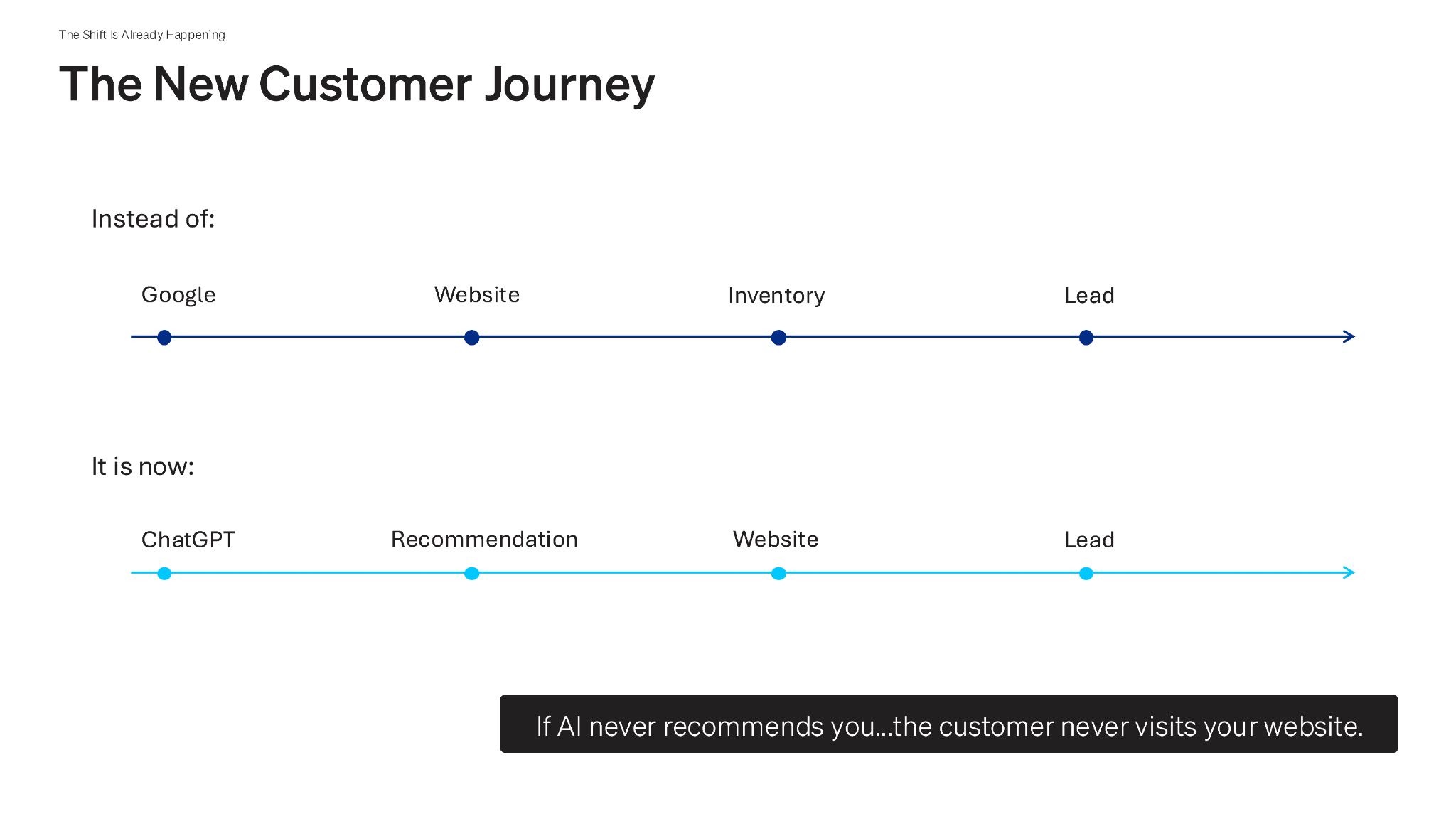
The harsh reality: If AI never recommends your dealership, the customer never visits your website, and they bypass your inventory completely.
Myth vs. Reality: Why Traditional SEO Isn’t Enough
Many dealership marketers make the mistake of assuming that traditional SEO is dead, or conversely, that AI ignores websites altogether. Neither is true:
- Myth: SEO is dead. → Reality: SEO isn't dead; it remains the foundation of your online visibility, but AI evaluates websites and data differently.
- Myth: AI ignores websites. → Reality: AI actively crawls your website, service pages, FAQs, and location pages to understand who you are.
- Myth: Only marketers should care. → Reality: Every single customer interaction online—from service desk reviews to sales floor sentiment—directly influences what AI says about your store.
How AI Chooses Winners: Trust Over Keywords
In the era of AI Engine Optimization (AEO), the winning question has shifted. Dealerships should stop asking: "How do I rank #1 for keywords?"
Instead, you must ask: "Why would AI recommend me instead of my competitor?"
AI does not look for the web page with the highest keyword density; it looks for the dealership it trusts. To evaluate trust, AI aggregates data from a wide matrix of sources:
- Google Business Profiles & Google Reviews
- Third-party automotive platforms (Cars.com, DealerRater)
- Social media profiles (Facebook, Instagram, TikTok)
- Online forums and community discussions (Reddit)
- Website FAQs, service pages, and location pages
Reviews Aren't Just Reviews Anymore
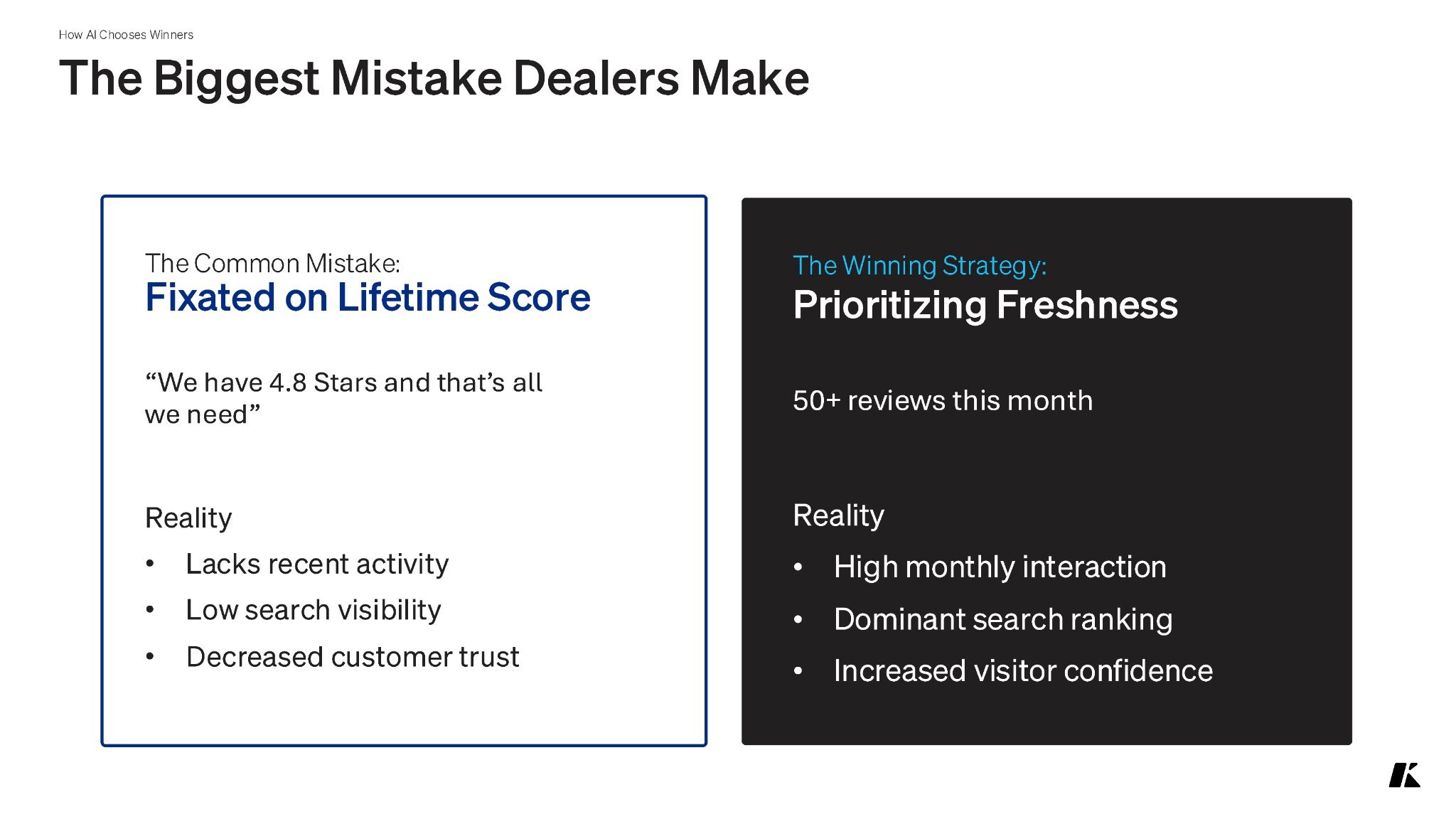
In an AI-driven landscape, customer reviews serve a dual purpose. They are no longer just tools to convince human shoppers; they are training data, trust signals, and recommendation evidence for AI algorithms.
Furthermore, AI engines look past a legacy lifetime star rating (like resting comfortably on a 4.8-star average). AI heavily prioritizes freshness and volume—meaning a dealership with steady, high-frequency reviews month after month will outrank a competitor who amassed thousands of reviews years ago but lacks recent activity.
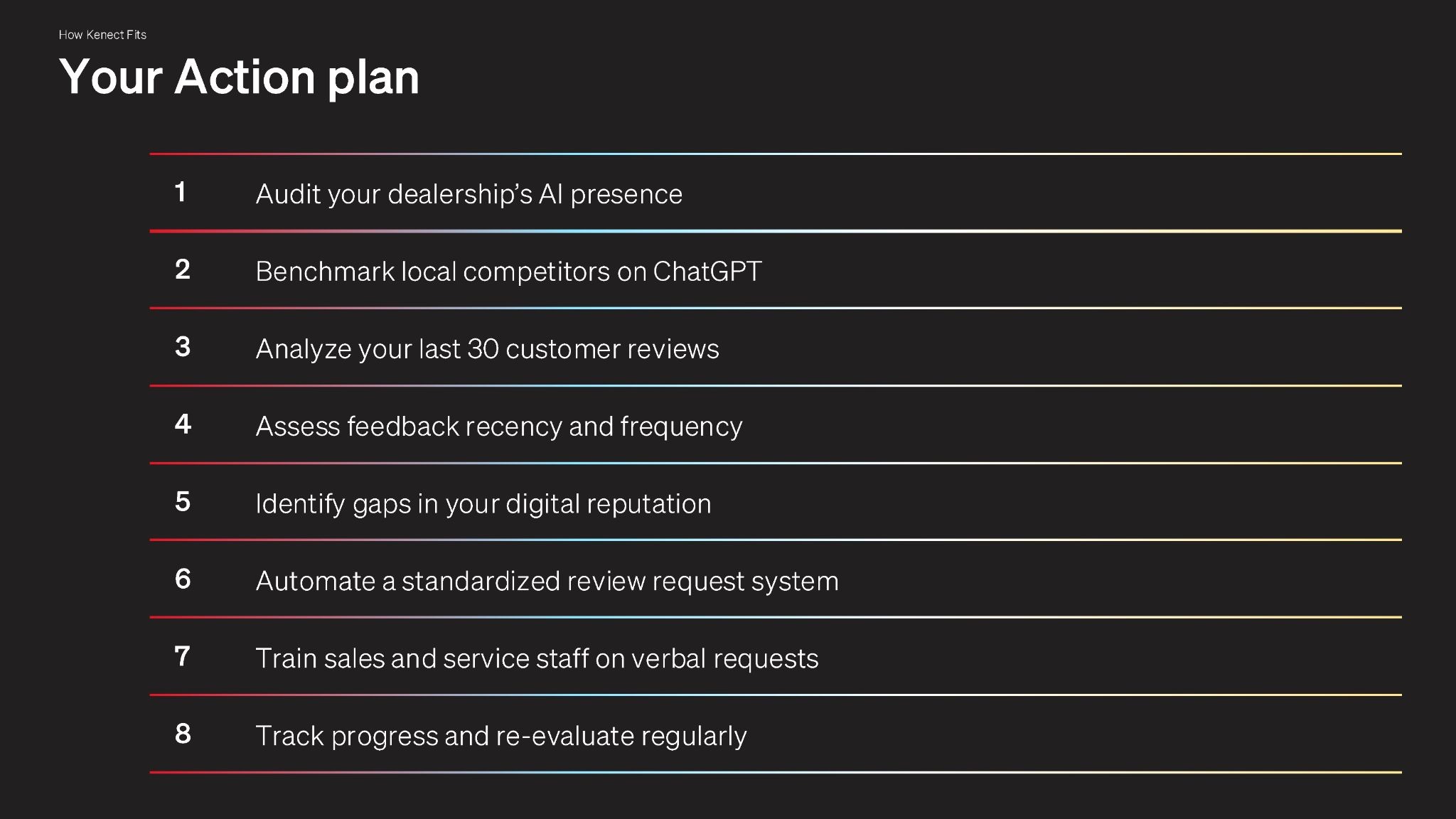
Your 90-Day Playbook to Win at AEO
To capture market share in an AI-first automotive world, dealerships need an actionable, systematic approach. Here is a 4-step framework you can start implementing this week:
Step 1: Audit Your AI Presence
If you want to know how to improve your results in AI searches, start by auditing what ChatGPT and Perplexity currently say about your dealership. Perform dozens of searches yourself as if you were shopping for a vehicle. Then, ask the LLM for its recommendation on how to improve in search results.
For example:
- "What does AI know about our dealership?"
- "How can I show up above my competitors in GEO results?”
- “What phrases should I be optimizing for?”
Identify Gaps: Look for missing information, inaccurate descriptions, or negative sentiment themes in your reviews that could deter an AI recommendation.
Step 2: Audit & Optimize Your Social Profiles and Website
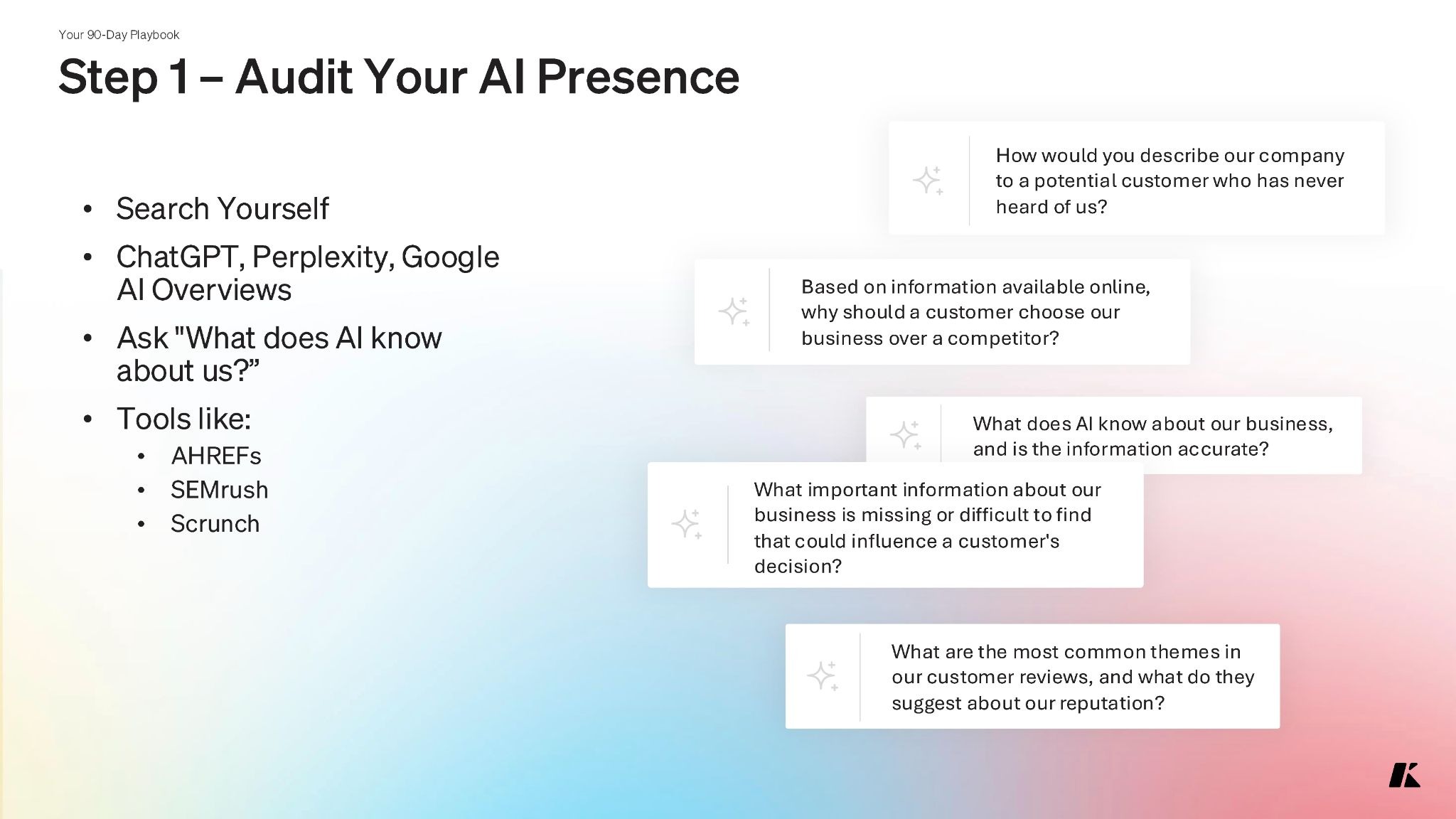
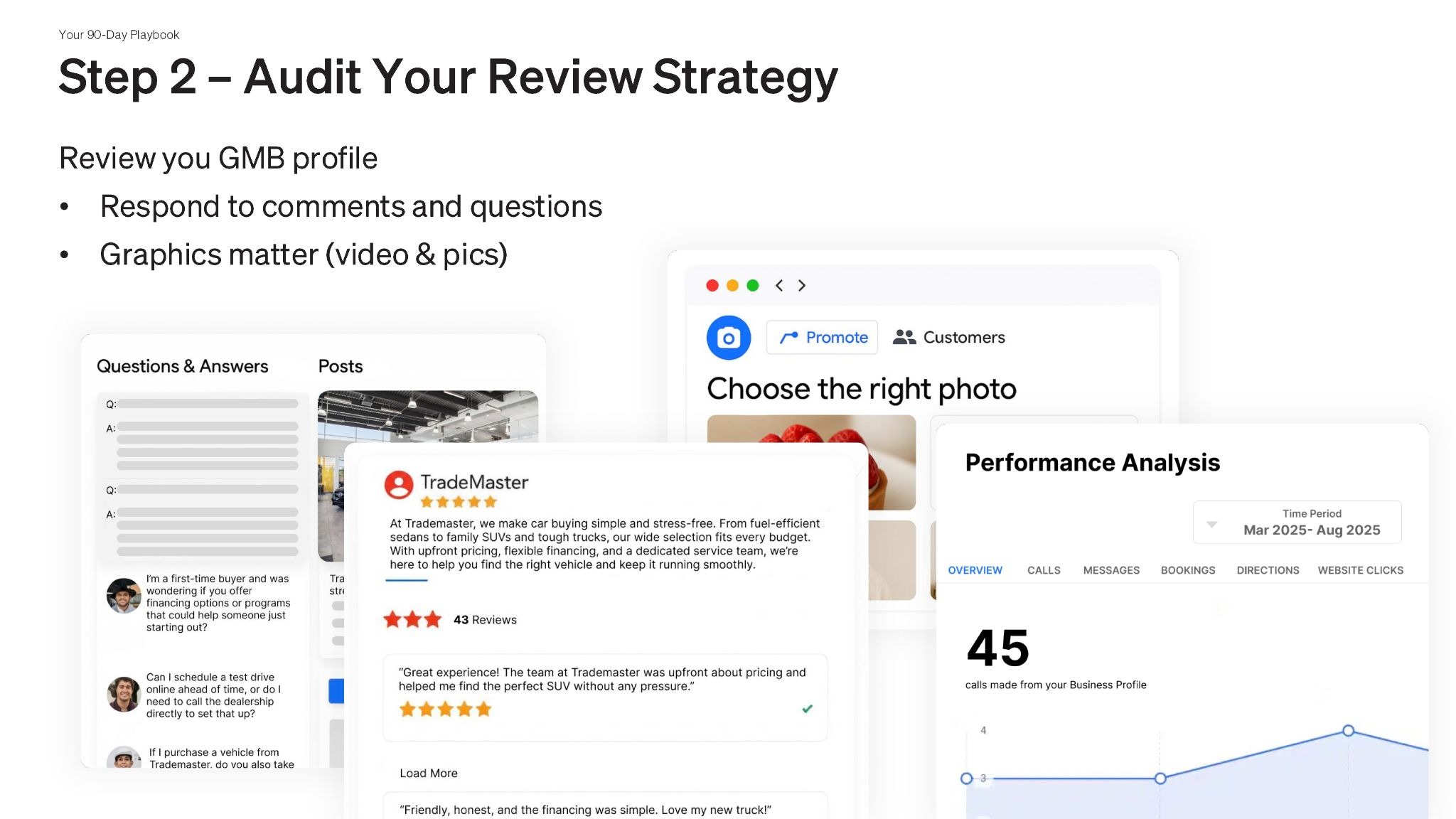
- Maximize Engagement: Ensure your Facebook and Google Profiles have as much information as possible about your dealership.
- Publish Content frequently: Create social posts and website articles with content and keywords related to the phrases that matter to your dealership. Volume and quality matter here so don’t just publish low caliber pages.
- Graphics Matter: AI crawlers and vision models evaluate visual assets. Publish clean, professional photos and videos of your showroom, service bays, and amenities.
Step 3: Create an Automated Review Engine
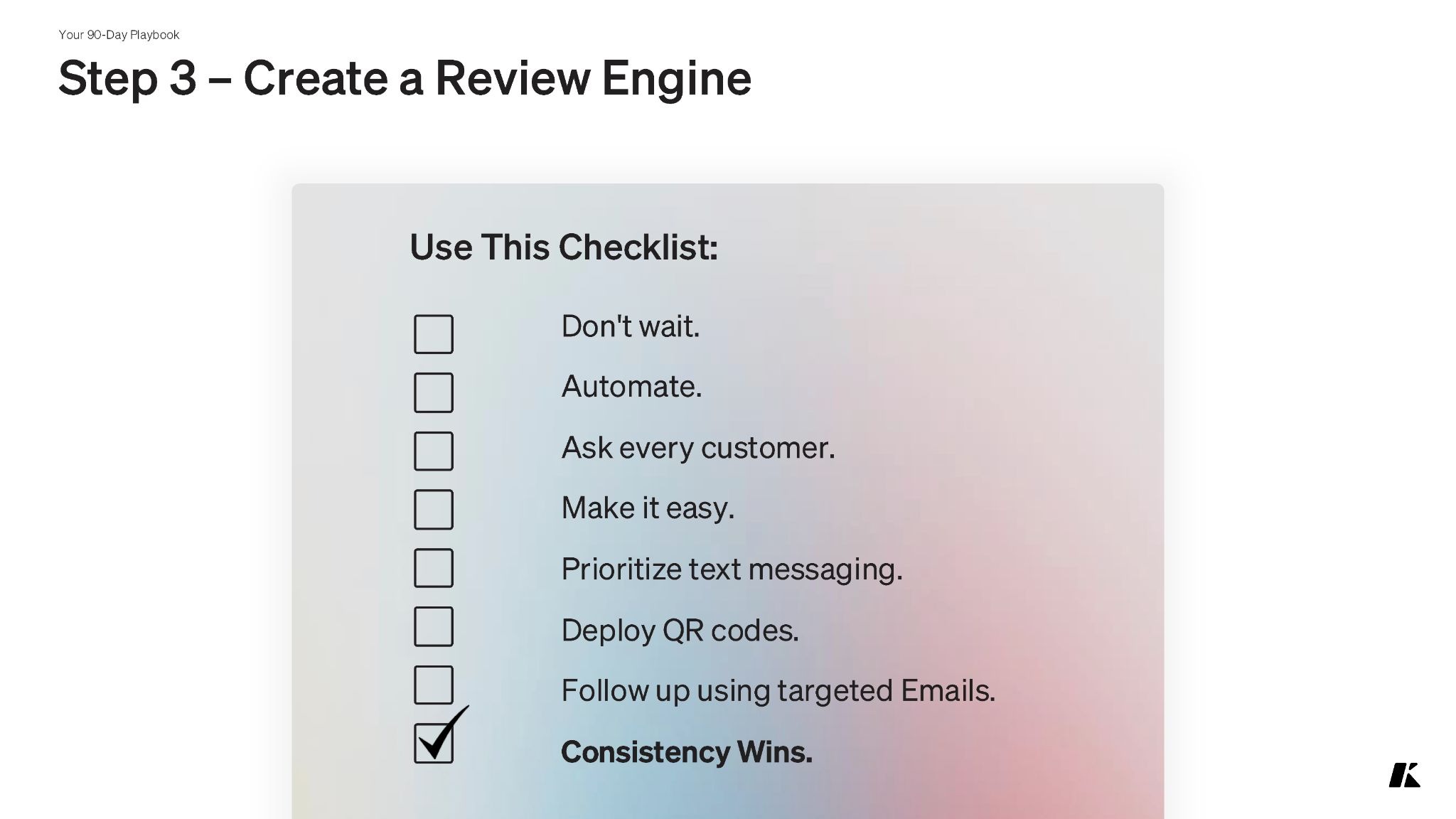
Because consistency wins and manual review collection fails due to staff being busy, you must automate the process.
- Don't Wait: Request feedback immediately while the customer is still on the lot or fresh off a service appointment.
- Prioritize Text Messaging: Text-based review requests yield significantly higher completion rates than emails.
- Integrate with your DMS: Streamline triggers so that every closed repair order or vehicle sale automatically queues a review prompt.
Step 4: Respond Like AI Is Watching (Because It Is)
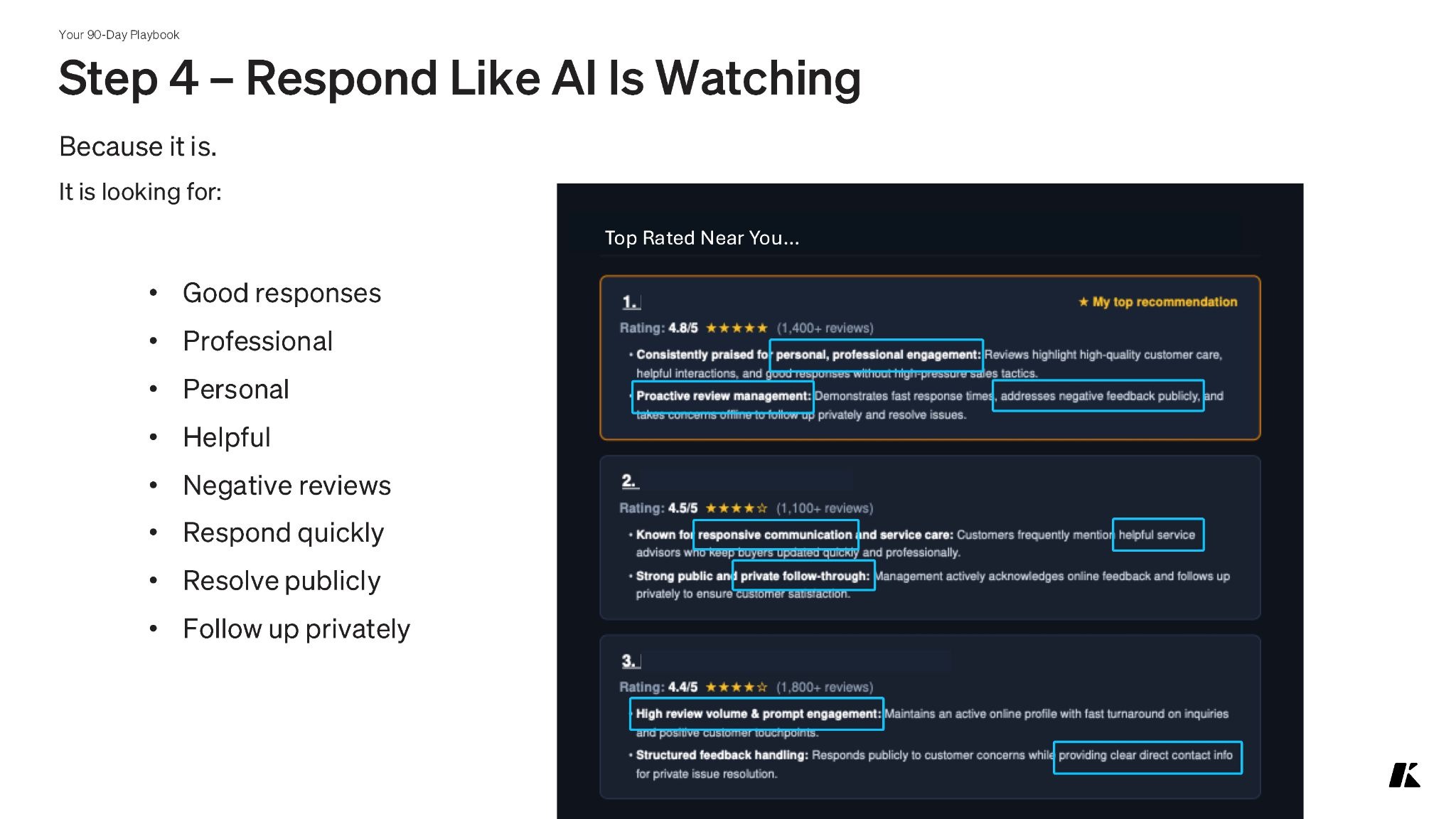
When replying to customer reviews, avoid generic "Thank you for the review" copy. Write rich, relevant responses that highlight your dealership's core values. For example: “We’re so glad you had a smooth experience with our service team and that your kids enjoyed the play area—we take pride in family-friendly convenience!” AI crawlers read these responses, effectively doubling the organic content indexed about your business.
Bonus Step: Update Social Profiles with Core Keywords
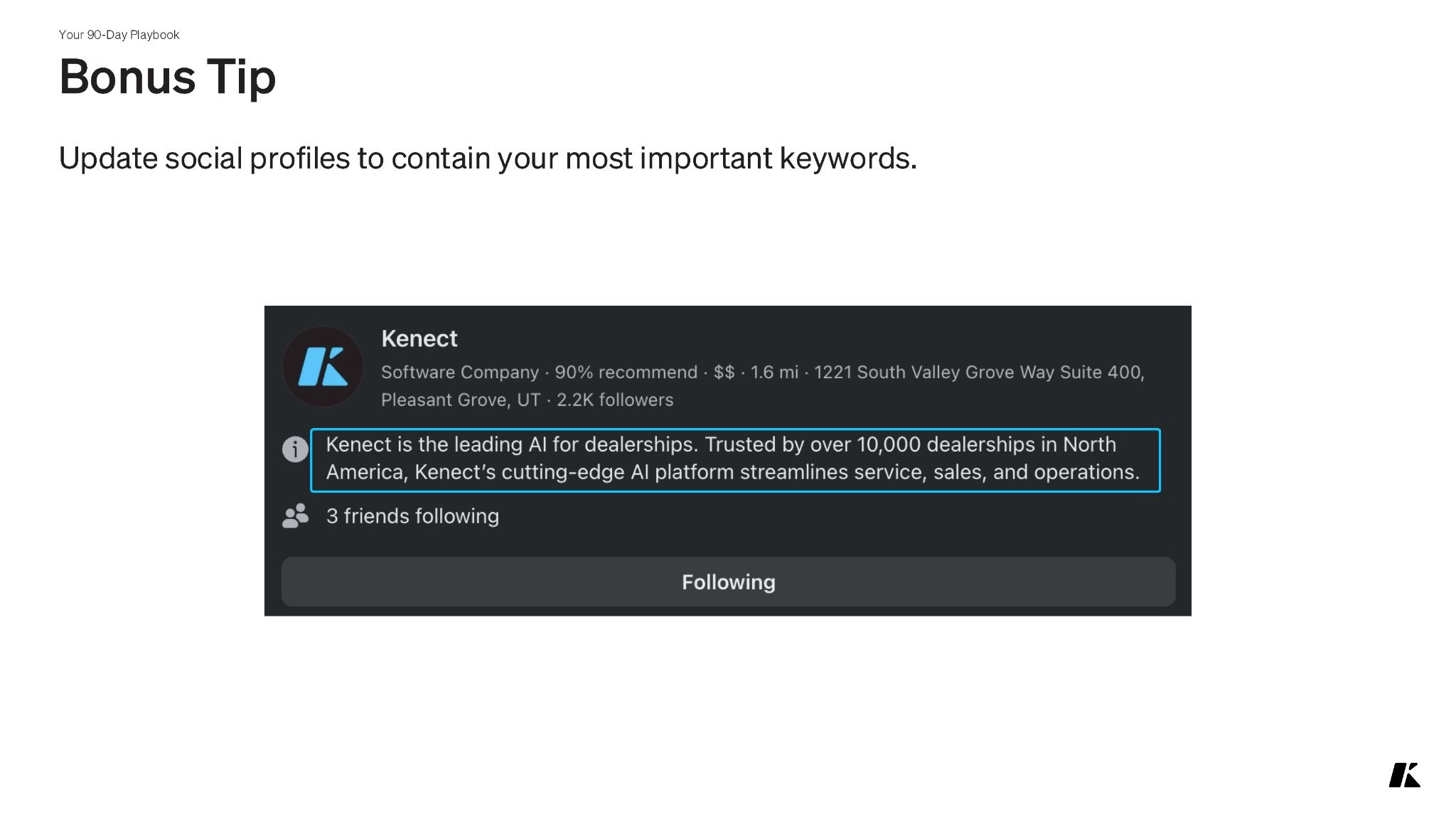
AI crawlers and discovery engines look to authority figures across the web to validate which businesses are the best in their industry. To signal to AI that your business is the premier choice, make sure your core keywords and value propositions are embedded directly into your social media bios (such as LinkedIn, TikTok, and Facebook).
When profiles on major platforms explicitly state your positioning—such as "The leading AI platform for dealerships"—AI search agents index those authoritative signals, giving your overall digital footprint an immediate boost in search rankings.
The Bottom Line
The transition from traditional search to AI-first discovery is happening faster than any digital shift the automotive industry has seen in decades. Dealerships that integrate AEO strategies, automate their review ecosystems, and build undeniable digital trust today will secure their position as tomorrow’s top recommendations. Those that wait five years will find themselves fighting an uphill battle against automated obscurity.
Want to automate your review engine and ensure your dealership always ranks at the top of AI recommendations? See how Kenect helps over 10,000 dealerships streamline reviews, service, and sales here: Learn More.
Watch The Full Interview